English
  Deutsch
  ไทย
ไทย  Indonesia
Sep 23 , 2026
NEWS

Choosing an electric kettle involves more than checking its capacity or wattage. Heating speed, materials, temperature control, insulation, safety features, and cleaning requirements all affect everyday usability. The right choice depends on how much water you normally boil, how often you use the appliance, and which functions are genuinely useful for your household.
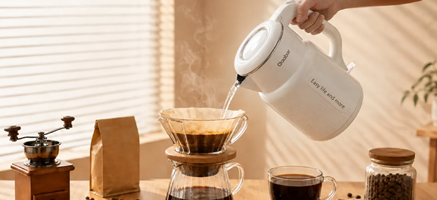
A practical electric kettle should balance heating performance, capacity, safety, and convenience. Before comparing models, consider several basic factors:
Capacity: Choose according to normal water consumption. A larger kettle is not necessarily better if you usually boil only one or two cups.
Power: Higher wattage can shorten heating time, but actual performance also depends on capacity and heating-element design.
Safety: Automatic shut-off and boil-dry protection are useful for everyday operation.
Handling: The handle, lid, spout, water-level markings, and weight when full all affect convenience.
Maintenance: An accessible interior can make cleaning and descaling easier.
These criteria are useful when comparing any household appliance brand. For example, when evaluating a Gaabor electric kettle, buyers can look at its capacity, heating performance, safety functions, and construction rather than making a decision based only on appearance or brand recognition.
An electric kettle uses a heating element to transfer electrical energy into heat. As the water temperature rises, a thermostat or temperature-sensing mechanism detects when the water reaches the intended temperature.
In a conventional kettle, the system is designed to switch the heating element off when the water reaches boiling point. Automatic shut-off means users do not have to monitor the appliance continuously or manually switch it off at the exact moment the water boils.
Some models also provide adjustable temperature settings. These can be useful for tea, coffee, or other drinks that require water below boiling point. For users who mainly need boiling water, however, a straightforward control system may be enough.
When comparing an electric kettle, it is therefore worth considering how its control system fits your actual routine instead of assuming that more settings always mean a better appliance.
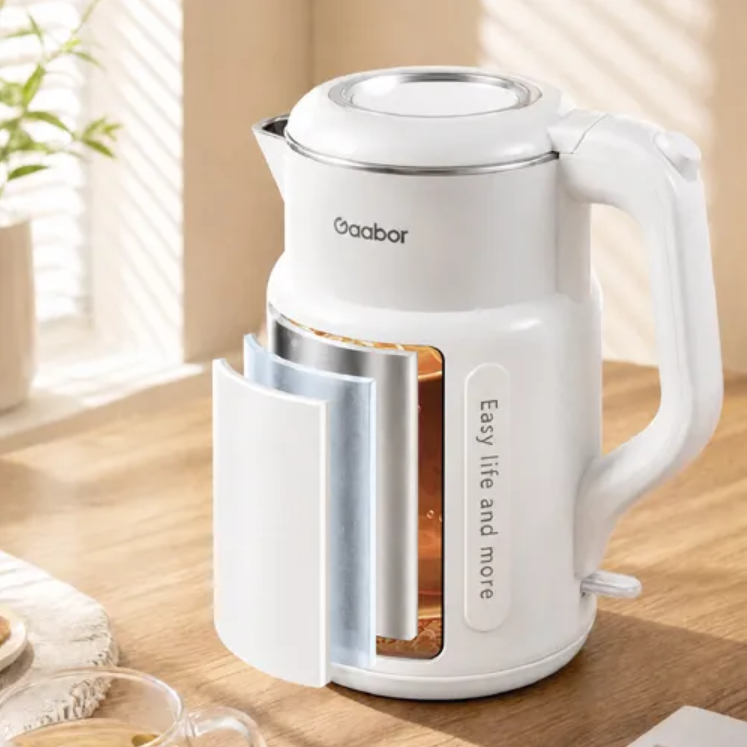
A 2-litre electric kettle can be practical for households that regularly prepare several cups of hot water. However, capacity should be based on actual usage rather than simply choosing the largest available size.
A smaller kettle may be easier to handle for one or two users, while families or shared kitchens may benefit from greater capacity. Larger models can reduce repeated boiling, but they also take up more space and become heavier when filled.
Consider the following before deciding:
How much water is normally boiled at one time?
How many people regularly use the kettle?
How much counter or storage space is available?
Is the full kettle comfortable to lift and pour?
Will most of the maximum capacity actually be used?
For everyday use, choosing an appropriate capacity can be more practical than simply selecting the biggest electric kettle available.
Material selection matters, but different materials can serve different purposes. Stainless steel is commonly used for water-contact surfaces because it is durable and suitable for repeated heating. Plastic may be used for handles, lids, exterior housings, and other components.
Rather than asking which material is universally better, buyers should look at the complete construction.
Water-contact area: Check which materials are used where hot water is stored.
Interior structure: A smooth, accessible interior can simplify cleaning.
Handle and exterior: These should provide comfortable handling and reasonable separation from hot surfaces.
Lid and opening: A practical opening makes filling and cleaning more convenient.
Water quality is another consideration. In areas with hard water, mineral deposits can gradually accumulate around the heating area and interior surfaces. Regular descaling can help control buildup and maintain normal heating performance.
This is why material selection should be considered together with construction and maintenance rather than treated as a simple stainless-steel-versus-plastic comparison.
Power, temperature control, insulation, and maintenance all contribute to the overall user experience.
| Feature | What to consider |
| Power | Higher wattage can support faster heating, depending on capacity and design |
| Thermostat | Helps regulate temperature and provides more controlled heating |
| Double-layer insulation | Reduces heat transfer to the outer surface |
| Automatic shut-off | Stops heating after the water reaches the intended condition |
| Interior structure | Easier cleaning can simplify long-term maintenance |
Higher wattage does not automatically make an electric kettle better. Heating speed also depends on the amount of water and heating-system design. A balanced combination of capacity and power is generally more useful than focusing on wattage alone.
Double-layer insulation can reduce heat transfer from the inner container to the outer surface, making the kettle more comfortable to handle. Temperature control can be valuable for users who prepare different beverages, while basic boiling control may be sufficient for routine use.
Cleaning should also be considered before buying. Mineral deposits can accumulate inside a kettle, particularly in areas with hard water. Regular descaling can help keep the interior clean and maintain normal operation.
For households looking for functions beyond boiling water, a Gaabor electric pot represents a different appliance category and may be more appropriate for cooking-related tasks. The distinction is useful because buyers should choose an appliance based on what they actually need it to do.
Choosing an electric kettle should begin with everyday usage rather than the number of features. Capacity should match household needs, while power should be considered alongside heating design. Materials, temperature control, automatic shut-off, insulation, and cleaning also influence convenience. Brands such as Gaabor can be compared using these practical criteria, helping buyers focus on the specifications that fit their kitchen, water consumption, and daily routine rather than simply choosing the model with the longest feature list.
Choose according to how much water you normally boil. Smaller models can suit individual use, while around 2 litres may be practical for families or multiple servings.
No. Higher wattage can support faster heating, but capacity, heating design, and temperature control also influence actual performance.
Yes. Stainless steel is commonly used for water-contact surfaces, but overall construction, insulation, handle design, and ease of cleaning should also be considered.
It stops the heating process after the water reaches the intended boiling condition, making the appliance more convenient for everyday use.
It can reduce heat transfer to the outer surface and make the kettle more comfortable to handle during and after heating.
Regular cleaning and descaling can help control mineral buildup, particularly in areas with hard water. The appropriate cleaning method should follow the manufacturer's instructions.

①AI Power Heat
②6 cooking menu
③Ideal for 2-3 people
④non-stick
MORE
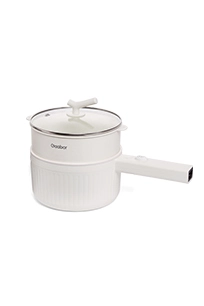
1. 2.0L capacity good for 3-4 person use
2. 600w strong power
3. Transparent glass top lid
4. Steaming and cooking at the same time
5. Non-stick coating easy to clean
MORE
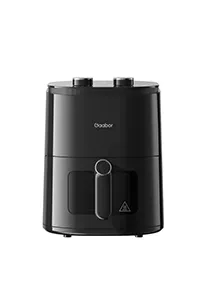
1. 360° Circulating Heating
2. Dual Temp Controls
3. Big Capacity with View Window
4. 10 Function Menus
MORE